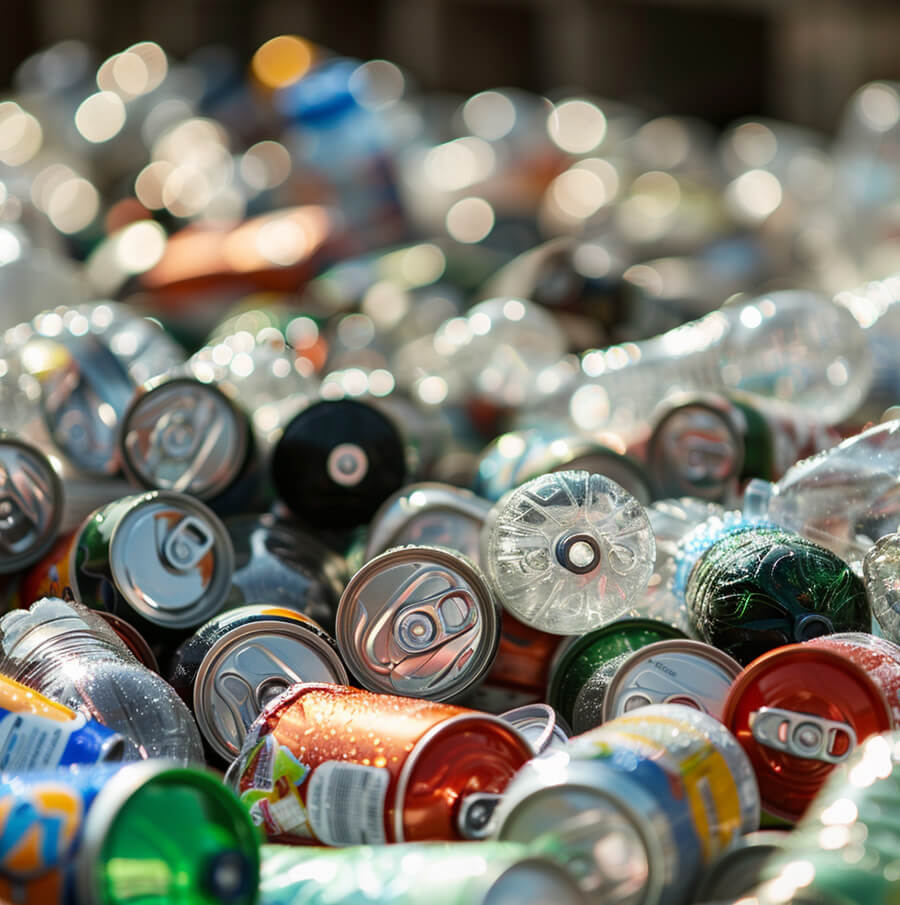
For businesses whose waste is made up of small quantities of a mix of recyclable materials, co-mingled recycling is a simple way to increase recycling and recovery percentages. This is where dry and clean items such as rigid plastics, paper, cardboard, glass, steel and aluminium can be collected in a single bin.
We work with:
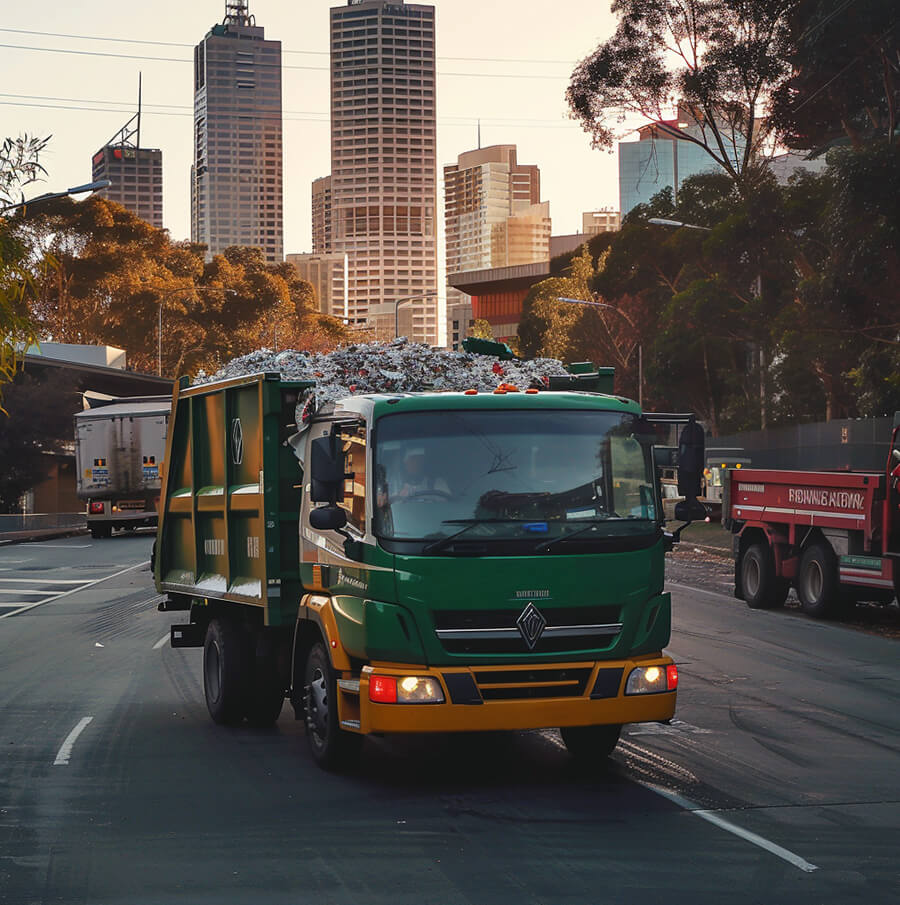
A number of businesses to provide commingle services as a single bin on-site. Once collected, these mixed recyclables are transported to a nearby recovery facility where they are sorted into separate streams for processing.
Solutions
Management solutions for commingled waste
Commingled recycling offers a convenient solution to increase recycling rates, but it also poses challenges in terms of contamination and processing. The decision to use single-stream or source-separated systems often depends on your organisations waste volume, available infrastructure, and economic considerations.
Our team can develop a plan to suit your needs and help you achieve better overall result by assisting you in creating an awareness plan for your staff which often leads to increased participation rates and efficiency.
Commingled recycling can be a great solution for some businesses to reduce costs and increase recycling rates. Speak to the experts at Resource Enviro to see if it is right for you.
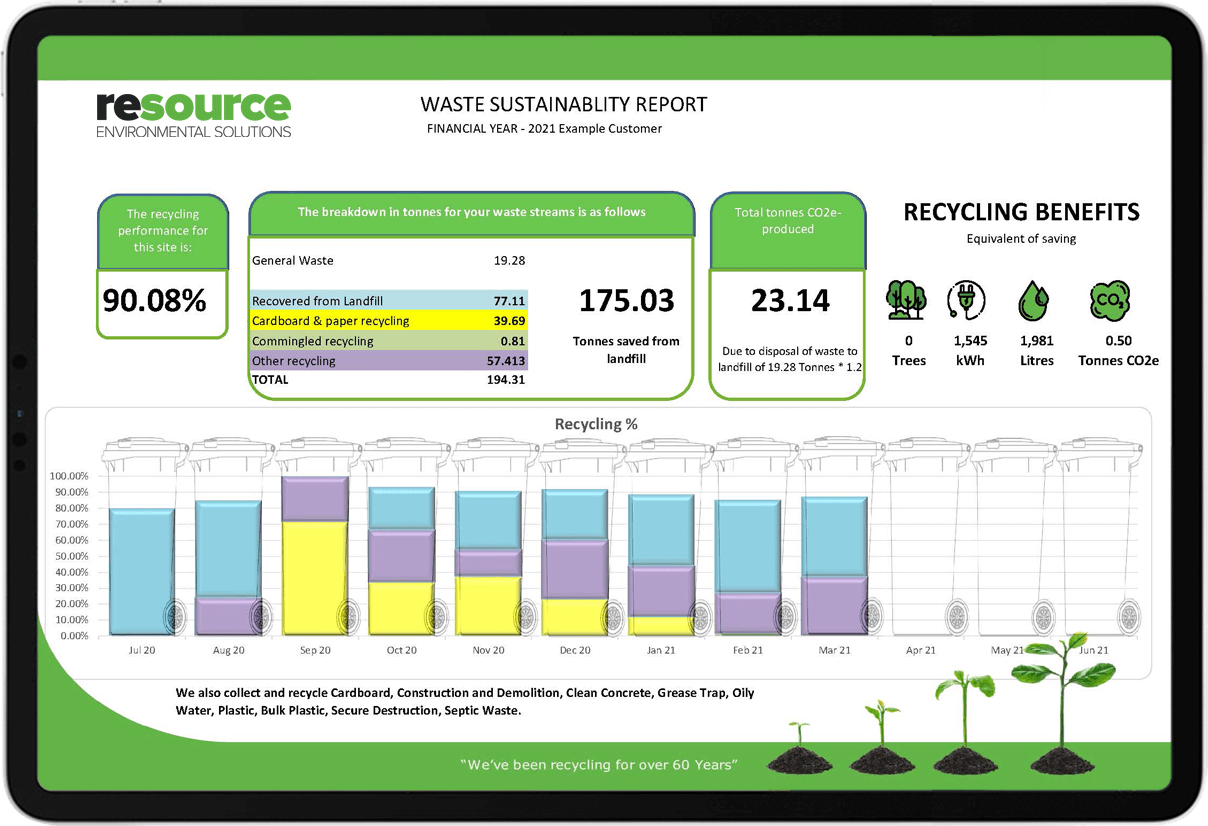
We deliver you one waste report covering all your waste streams and highlighting your decreases in collections and costs, along with the increases in recycling rates – helping you ticks all the ‘green’ boxes.
Food and organic waste management with sustainability in mind
At Resource Environmental Solutions, we can arrange the collection and disposal of all types of commingled waste anywhere in Australia.